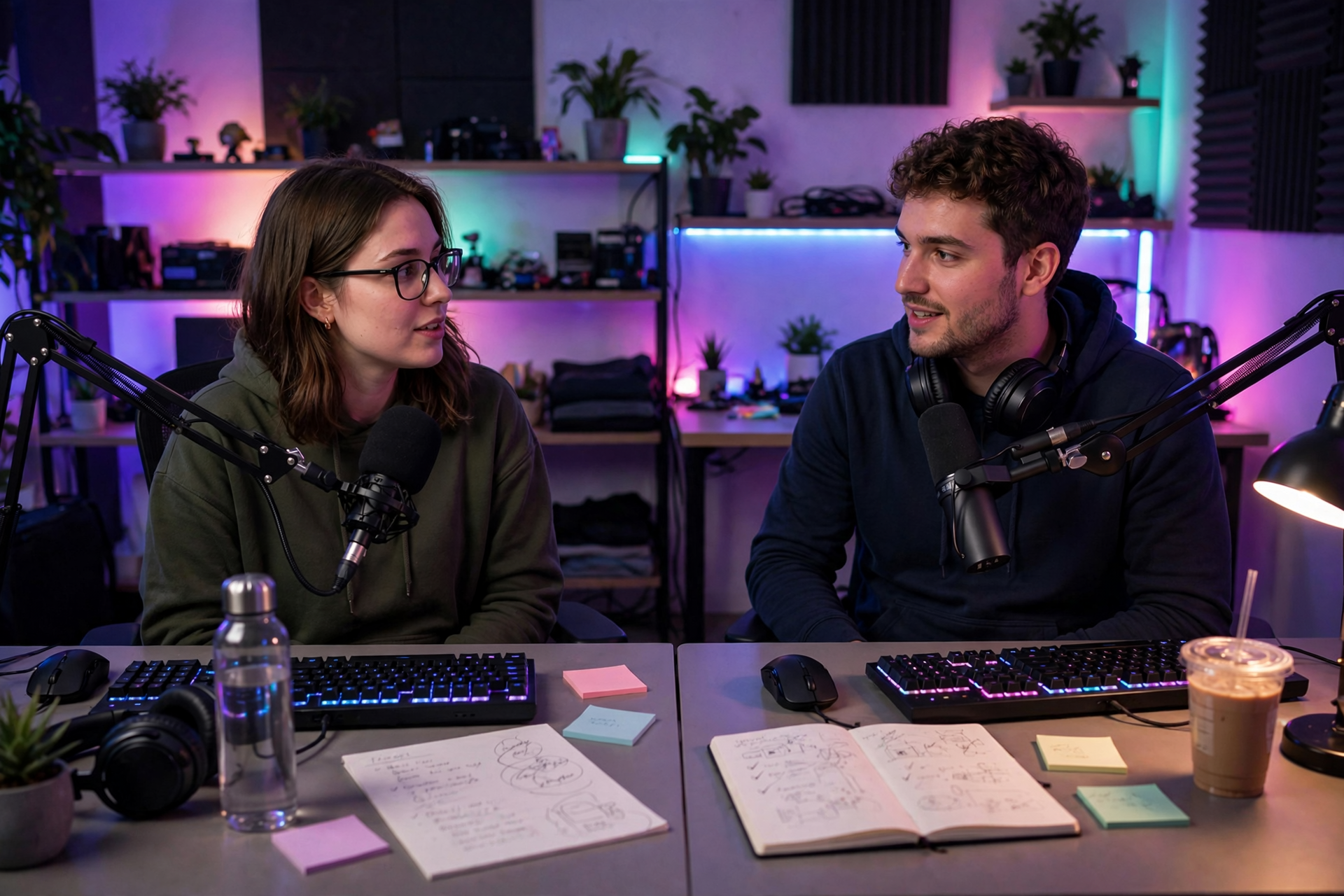
A Twitch collab or raid works best when every creator knows what viewers are being invited into. Instead of treating the event as a simple traffic swap, create a shared audience contract: a short agreement about the experience, boundaries, responsibilities, and next step each community can expect.
Define the audience promise before you choose a partner
Start by describing the event in one sentence that both communities can understand. For example: “Two strategy creators compare their first-hour decisions in the same challenge,” or “A variety streamer joins a relaxed co-op session with a creator known for high-energy commentary.” The promise should explain what viewers will see, not merely who is appearing.
Then check whether the promise fits both audiences. Compare content tone, typical stream length, language, moderation standards, and tolerance for spoilers, mature subjects, backseating, or competitive banter. A creator can be talented and still be a poor match if their viewers would feel confused or uncomfortable in the shared format.
Write the contract in a short creator brief
You do not need a formal legal document for an ordinary stream. A shared message or one-page brief is enough. Include the date, start and end windows, activity, primary channel, guest permissions, planned transitions, promotion responsibilities, and what happens if one creator has to cancel.
Add the details people often assume incorrectly: whether both creators may use clips, whether names or thumbnails can be reused, how donations or sponsorships will be handled, and whether either creator has subjects that are off-limits. Clear written expectations prevent awkward decisions while you are live.
Design the collab around contribution, not screen time
Give each creator a distinct job in the broadcast. One person might explain the rules while the other tests them, or one might lead the gameplay while the other interprets audience choices. Distinct contributions create a reason for both communities to watch instead of making one guest feel like a decorative cameo.
Use a simple rotation so neither audience waits too long for something familiar. For a two-hour event, you could open together, run a focused segment on one channel, switch to a shared challenge, and finish with separate closing remarks. Tell viewers where the next segment is happening before the switch, and repeat the instruction in chat when the transition approaches.
Prepare both moderation teams for the same room
Before going live, give the participating moderators a compact rule sheet. Cover spoiler handling, personal questions, self-promotion, arguments between communities, links, backseating, and what behavior should trigger a timeout or ban. If the collab uses voice chat, decide who can remove a disruptive participant and who handles technical interruptions.
Create a private moderator channel or group message for quick decisions. Agree on neutral phrases such as “moving on,” “checking the rules,” or “taking that off-stream” so the host can redirect a problem without turning moderation into part of the entertainment. Consistent enforcement makes the shared space feel intentional rather than temporarily unmanaged.
Make the raid a recommendation, not an obligation
Raid when the destination genuinely fits the people still watching. Consider the creator’s current activity, tone, language, maturity level, and whether their opening minutes are suitable for a sudden group arrival. A smaller channel with a strong match can be a better destination than a larger channel that gives your audience no useful reason to stay.
Ask viewers to watch respectfully rather than demanding follows, subscriptions, or chat messages. The departing host can provide a concise introduction, then let the receiving creator run their own stream. A raid should introduce a possible next place to spend time; it should not pressure viewers into proving loyalty to either channel.
Measure whether the relationship improved the next stream
Review the event from both sides within a day or two. Note whether viewers understood the premise, where conversation became confusing, whether the technical setup held up, and which segment produced the strongest shared energy. Look beyond the peak viewer count: useful signals include returning names, meaningful chat participation, clip-worthy moments, and whether the partner wants to work together again.
End with one concrete follow-up rather than a vague promise to collaborate sometime. That could be a rematch, a guest appearance, a community game night, or a raid exchange under different conditions. Keep a small collaboration log with the date, format, partner, audience fit, problems, and next experiment so each event teaches you something instead of starting from zero.
Ready to run viewers, chatters, or followers from one dashboard?
View pricing