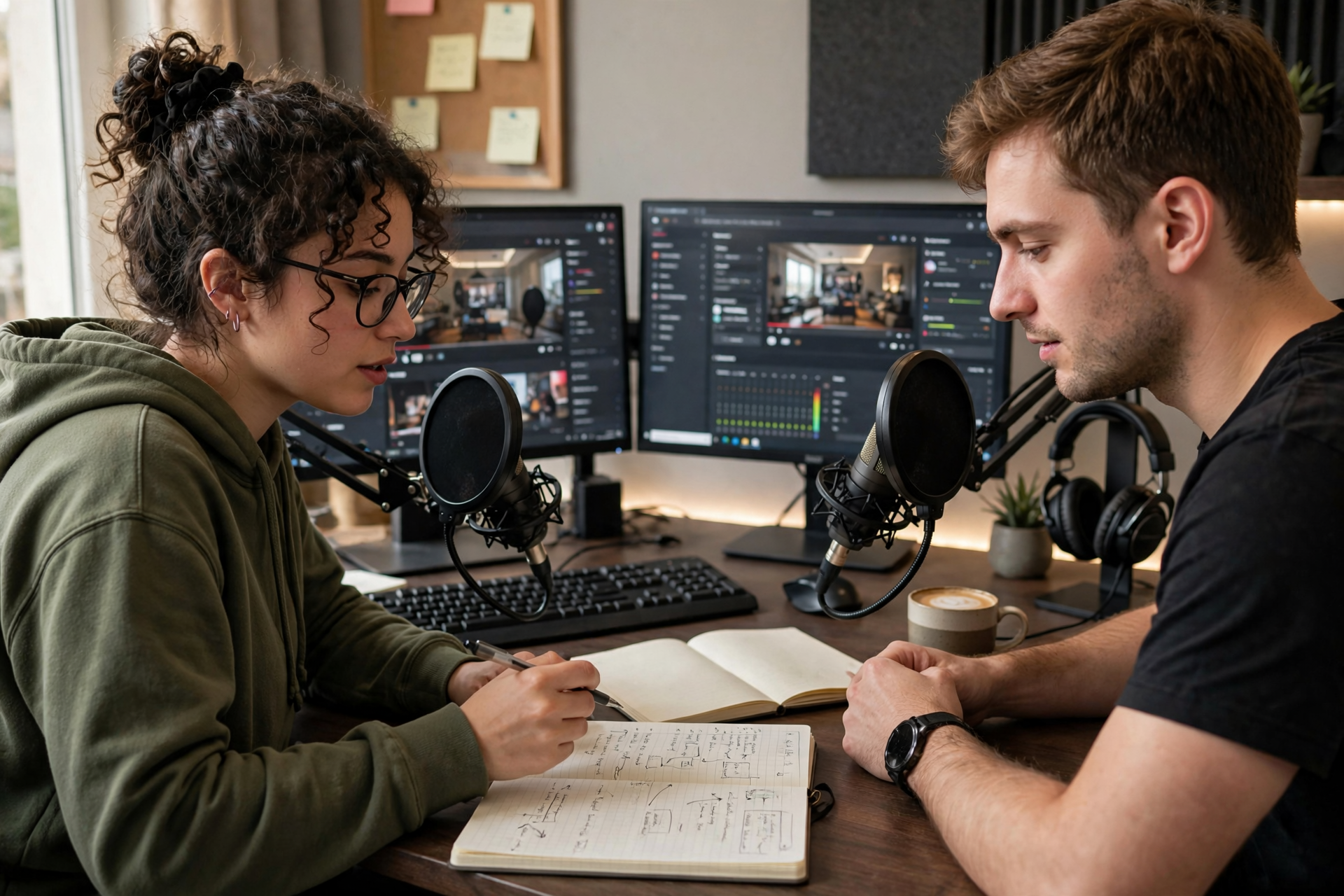
A collaboration does not need to begin as a major event with multiple creators, custom graphics, and hours of planning. On Kick, a better first move is often a small pilot: one clear activity, one compatible partner, one defined handoff, and enough evidence to decide whether the format deserves a second attempt. Treating the broadcast as a test protects both communities and makes improvement much easier.
Start With a Pilot Instead of a Production
Choose a collaboration that can succeed without elaborate preparation. Good pilot formats include a co-op game objective, a timed challenge, a topic comparison, a reaction session with clear boundaries, or a short guest segment followed by a raid. Keep the central activity narrow enough that a new viewer can understand it within a minute.
Write down the purpose before contacting a partner. You might be testing whether both audiences enjoy the same game, whether a guest segment creates better conversation, or whether a raid handoff produces meaningful visits. Pick one primary outcome and two supporting signals, such as average watch time after the handoff, chat participation, follows, or the number of viewers who return to the next broadcast.
Select a Partner for Compatibility, Not Size
Compare potential partners on practical fit: overlapping broadcast hours, similar moderation standards, compatible content boundaries, reliable communication, and an audience that can understand your format. A creator with a smaller but genuinely related community may produce a smoother pilot than a much larger channel whose viewers expect something completely different.
Review a few recent streams before sending an invitation. Notice how the creator handles silence, disagreement, sponsored topics, sensitive subjects, and technical problems. Then make the proposal specific: explain the concept, estimated length, responsibilities, desired date, and what each person receives from the test. A clear invitation is easier to accept or decline than a vague request to collaborate sometime.
Build a One-Page Run of Show
Create a short shared document with the broadcast order. Include the opening premise, who leads each segment, the planned transition point, backup activity, raid destination, and closing message. Add the exact usernames or channel links needed for the handoff so nobody is searching through chat while the stream is live.
Keep the schedule flexible, but define decision points. For example, start with five minutes of introductions, run the main activity for 35 minutes, take a two-minute reset, and finish with a clear result before raiding. Decide in advance what happens if one creator disconnects, the activity ends early, the audience dislikes the format, or the planned raid target is offline.
Run a Technical and Safety Check
Test the parts of the setup that viewers will actually experience. Confirm microphone levels, game or desktop audio, guest audio, camera framing, delay, scene changes, and the method you will use to communicate privately. A short private call can reveal echo, doubled audio, unstable connections, or confusing screen layouts before the audience sees them.
Agree on boundaries before going live. Decide which subjects are off limits, who can pause the activity, how moderation will handle harassment, and what happens if a private message or personal detail appears on screen. Confirm that both creators understand Kick's current community and content rules, and verify the raid controls in the dashboard beforehand rather than assuming the interface has not changed.
Make the Handoff Feel Like a Decision
Do not treat the raid as an automatic button press at the end of an exhausted stream. Give viewers a reason to move by explaining what the next channel is doing and why it connects to the pilot. A useful handoff sounds like a recommendation: identify the creator, name the activity, mention the moment viewers should look for, and tell your community how to behave when they arrive.
Coordinate the receiving creator's opening without scripting every word. They should know approximately when the raid will happen, what context to acknowledge, and what segment is ready for incoming viewers. Keep the welcome brief enough to preserve momentum, then return attention to the activity rather than turning the first several minutes into a roll call.
Review the Pilot Before Repeating It
Review the collaboration with your partner while the details are fresh. Ask where the format became unclear, which segment created the strongest conversation, whether either audience felt ignored, and whether the technical setup added unnecessary friction. Compare the results with your original goal instead of judging the event only by peak viewers or the size of the raid.
Choose one of three next steps: repeat the same pilot with one adjustment, expand it into a larger event, or retire the format. Save the useful pieces in a reusable template, including the outreach message, run of show, technical checklist, moderation notes, and handoff wording. That small library lets future collaborations become easier without making every creator relationship feel like a new production from scratch.
Ready to run viewers, chatters, or followers from one dashboard?
View pricing